
A paid media strategy is a documented plan that maps your audience, channel mix, creative, and measurement to one business KPI: pipeline contribution, marketing efficiency ratio, or a defensible CAC ceiling, depending on your model. The one rule that separates strategies from spending sprees: document the plan and map every channel to a buyer stage before a single dollar leaves the account.
TL;DR:
- Running paid media without a documented strategy that maps channels to buyer stages often leads to wasted budget and inefficient spending.
- Search captures high-intent demand directly, while paid social creates demand, requiring different creative approaches for each channel.
- A well-structured paid media plan should prioritize goals, audience segmentation, measurement methods, creative design, and budgeting triggers before launching campaigns.
- Relying on platform-reported ROAS can be misleading; blended metrics like MER or pipeline contribution provide a more accurate picture of true profitability.
- Effective paid strategies integrate with owned channels, focus on unit economics, and employ rigorous testing and tracking to optimize performance and scalability.
Table of Contents
- What Paid Media Is and Why It Matters
- Which Paid Media Channels Should You Actually Use?
- How Do You Build a Paid Media Strategy Step by Step?
- What Should You Actually Measure to Prove Paid Media Works?
- How Should You Allocate Budget and Scale Paid Media?
- How Often Should You Test Paid Media Creative?
- What Makes a Landing Page Convert Paid Traffic?
- Why Is Your Paid Media Campaign Underperforming?
- How Do Integrated Paid and Owned Systems Change the Math?
- Should You Hire a Growth Operator or Keep Paid In-House?
- Ready to Turn Ad Spend Into Predictable Pipeline?
- Where to Learn More About Paid Media Strategy
- Sources
What Paid Media Is and Why It Matters
Paid media is advertising you pay for to place your message in front of a chosen audience. That's the whole definition, and it's the part most teams skip past on their way to picking platforms. It sits apart from owned media (your site, your email list, your product) and earned media (press, reviews, word of mouth), and Adobe's breakdown of the category is worth reading if you've never separated the three cleanly in your own reporting.
Paid works best when you already have a validated offer and need velocity, not when you're still guessing at product-market fit. It's the wrong lever for a business that hasn't nailed its message; ad spend just makes a bad offer fail faster and more expensively.
Quick trade-offs worth internalizing:
- Pro: Immediate, controllable volume once targeting and creative are dialed in.
- Pro: Data you can act on within days, not months.
- Con: Costs scale with competition, so margins compress as you grow.
- Con: It amplifies a weak offer instead of fixing it.
Which Paid Media Channels Should You Actually Use?
Most teams pick channels based on what's trendy, not what the funnel needs. Every channel has a job. Assign it one, or it becomes a budget sink dressed up as a strategy.
- Search captures existing demand, high-intent, bottom-funnel, and rewards direct-response creative.
- Paid social creates demand among people who weren't actively looking, so it needs scroll-stopping creative, not a repurposed search ad.
- Programmatic/display builds reach and retargets efficiently at low cost per impression.
- Video (especially YouTube) requires a content-first mindset and a longer runway; treat it as brand-building with a 3-6 month measurement horizon before judging ROI, a point The HQ Digital's practitioner guide makes explicitly.
- Native and affiliate extend reach through trusted third-party context, useful for consideration-stage nurturing.
- Audio (podcasts, streaming) builds familiarity in categories where trust drives the buying decision.
Statistic Callout: CXL's research on channel roles confirms the pattern: search captures intent, paid social creates it, and each channel demands different creative and targeting logic. Copying a competitor's channel mix without matching their funnel role is how budgets get burned. Startups deciding where to start should look at a channel priority matrix built for their specific stage rather than industry averages.
How Do You Build a Paid Media Strategy Step by Step?
A paid media strategy isn't a channel list. It's a decision framework that answers who you're targeting, where you'll reach them, and what you want them to do, before you spend a cent, according to SearchEngineStrategies' practitioner framework. Here's the sequence that holds up across B2B and DTC:
- Define goals and unit economics first. Set your primary KPI and calculate your acceptable CAC or break-even ROAS using loaded costs, creative, tech, team, not just media spend.
- Build your ICP and audience tiers. Segment by intent (in-market vs. aware vs. cold) so each tier gets a different message and budget weight.
- Choose channels mapped to buyer stages, not to what's cheapest this quarter.
- Set measurement and attribution before launch. Decide your decision windows and tracking method now, not after the data looks confusing.
- Design creative and offers per funnel stage, matching the ask to how ready the audience actually is.
- Allocate budget with an experimentation reserve and write down the specific triggers that justify scaling a channel.
- Plan the post-click journey and handoff to sales or product before traffic arrives, not after conversion rates disappoint you.
Pro Tip: Write the framework down in one page before you touch an ad account. Teams that document the plan see materially lower acquisition costs than those improvising channel by channel, per SearchEngineStrategies' analysis.
The order matters. Skip step one and every later decision, targeting, creative, budget, gets built on a guess about what "good" even means.
What Should You Actually Measure to Prove Paid Media Works?
Platform-reported ROAS lies to you, not maliciously, but structurally. Privacy changes and cross-device gaps have made single-platform attribution increasingly unreliable, which is why The HQ Digital argues for blended metrics like MER (marketing efficiency ratio: total revenue divided by total ad spend) instead of trusting whatever number Meta or Google hands you.
Primary metrics should map to your business model: pipeline contribution for B2B, MER or blended CAC for DTC. Everything else, click-through rate, cost per lead, is diagnostic. Useful for troubleshooting, dangerous as a north star.
For attribution, weigh your options honestly:
- Multi-touch attribution gives directional credit across touchpoints but tends to overweight retargeting and lower-funnel channels.
- Holdout incrementality testing measures actual marginal lift by withholding ads from a control group, more work to set up, far more trustworthy.
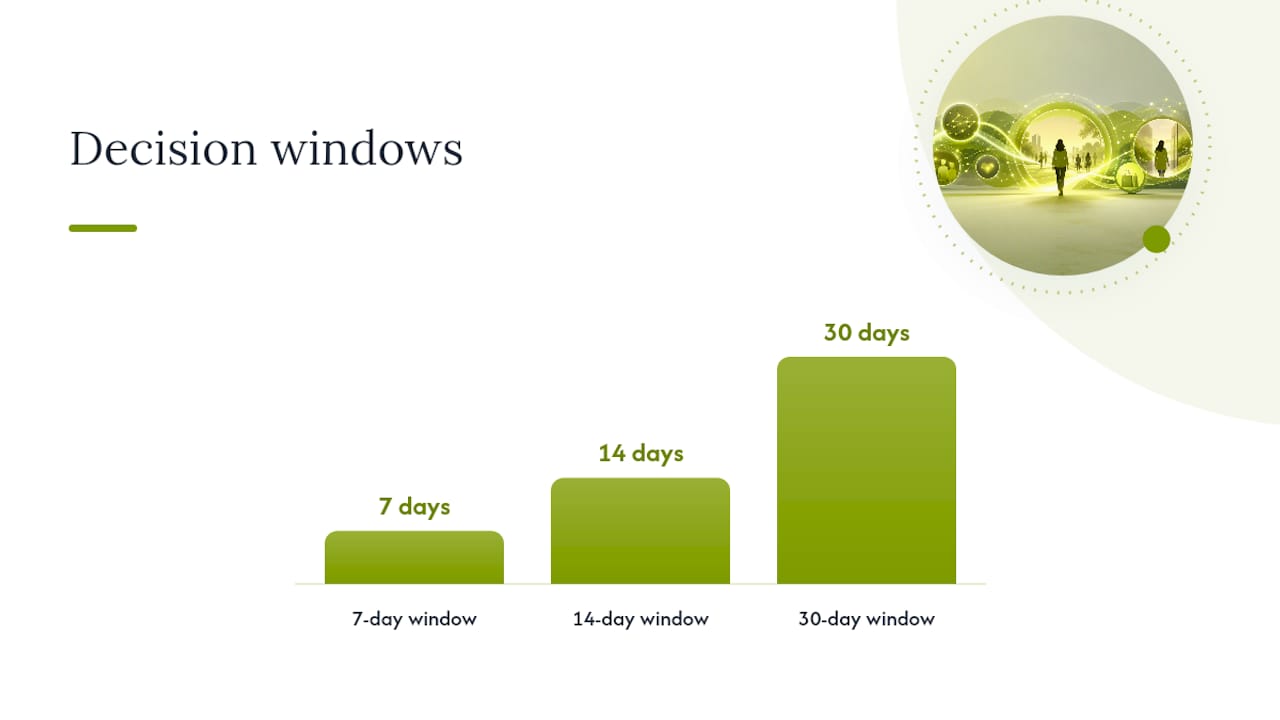
Before you scale anything, run this checklist: UTMs on every campaign, CRM fields mapped to ad platform data, server-side event tracking to survive browser restrictions, and a fixed decision window (7, 14, or 30 days) applied consistently. If your funnel leaks between these systems, read through how funnel leakage quietly bleeds cash before adding another dollar of spend.
How Should You Allocate Budget and Scale Paid Media?
Start from unit economics: what does one customer need to cost, at most, to keep your model profitable? Work backward from there to your daily spend cap.
- Reserve 10 to 20% of budget for experiments, per Working Weekends' scaling guidance, and size each test large enough to produce a real signal, not a coin-flip result you mistake for insight.
- Set scaling triggers in writing: a channel earns more budget only after hitting a defined CAC or MER threshold over a minimum sample size, not after one good week.
- Run incrementality holdouts quarterly, especially on retargeting and email, which routinely overclaim credit for conversions that would have happened anyway.
Pro Tip: *Treat your experimentation budget like R&D spend, not marketing waste.
How Often Should You Test Paid Media Creative?
Creative has a different job at each funnel stage. Awareness creative needs to interrupt a scroll; consideration creative needs to answer an objection; conversion creative needs to remove friction and close.
- Run 3 to 5 variants per ad set at launch, enough to find a signal without diluting spend past usefulness.
- Give each test 7 to 14 days or a minimum impression threshold before judging it, per Working Weekends' testing cadence.
- Retire underperformers fast and scale winners immediately; creative fatigue sets in faster than most teams expect, especially on paid social.
- Watch frequency and CTR decay as your signal to refresh, not a fixed calendar date.
The most common creative mistake isn't bad design. It's testing too few variants, then declaring a "loser" off a sample too small to mean anything.
What Makes a Landing Page Convert Paid Traffic?
Paid spend dies quietly on bad landing pages more often than it dies on bad targeting. The message that got the click has to survive the click; if your ad promises one thing and the page delivers another, you paid for a bounce.
- Match ad copy, imagery, and offer to the landing page and to the specific audience segment that clicked.
- Keep forms short at first touch, then use progressive profiling to collect more detail later.
- Respond to leads within minutes, not hours; speed-to-lead is one of the cheapest conversion levers available.
- Run CRO checks before adding spend: page load time, mobile rendering, and a clear single call to action per page.
Fixing on-site conversion rate often produces more revenue than adding another dollar of media spend, a point Working Weekends makes plainly and one worth internalizing before your next budget request. For the mechanics of page structure itself, Canty Digital's guide to high-converting landing pages is a solid technical reference.
Why Is Your Paid Media Campaign Underperforming?
Most "the channel doesn't work" complaints are actually tracking, audience, or KPI problems wearing a channel's name.
- Broken tracking: audit pixel firing and UTM consistency first; a silent tracking gap makes a good channel look like a bad one.
- Audience too broad: tighten targeting and add exclusion lists (existing customers, churned leads) before blaming the platform.
- Wrong KPI: if you're optimizing for clicks or impressions instead of pipeline or MER, you're measuring the wrong outcome entirely.
- Post-click mismatch: a page that doesn't match the ad's promise recovers fast once you rewrite it to match.
For a deeper technical primer on why tracking breaks in the first place, Toddstager's guide to conversion tracking walks through the fundamentals most teams never fully set up.
How Do Integrated Paid and Owned Systems Change the Math?
Over 15 years building growth systems, I've seen the same failure repeat: teams treat paid and owned as separate departments with separate budgets, then wonder why CAC keeps climbing. My engagements have generated hundreds of millions in tracked revenue at an average 7x ROAS, and the pattern holds across categories: paid buys velocity, owned compounds it, and treating them as one system changes what you scale and how you attribute credit.

Two audit questions worth asking today: does your retargeting pool include people your owned channels already nurtured? And does your attribution model give paid credit for conversions your email list would have closed anyway?
Should You Hire a Growth Operator or Keep Paid In-House?
Bring in outside help when CAC keeps climbing despite "optimized" campaigns, when nobody can explain your attribution model in one sentence, or when one channel carries the entire funnel and nobody's tested a second. A senior growth operator should deliver, fast: a real unit-economics model, a working attribution setup, and one channel proven repeatable before touching a second.
Before any engagement, check for a documented ICP, current CAC by channel, and a clear view of what "good" means for your business. If you're weighing a full-time hire against outside expertise, this fractional CMO versus agency comparison lays out the tradeoffs honestly.
— Asha
Ready to Turn Ad Spend Into Predictable Pipeline?
Ashafrazier is the alternative to hiring a full internal team or a generalist agency to fix a paid media strategy that isn't converting. Instead of another retainer built around vanity metrics, you get a growth system that integrates paid and owned channels around your actual unit economics, the same approach behind an average 7x ROAS across hundreds of millions in tracked revenue.
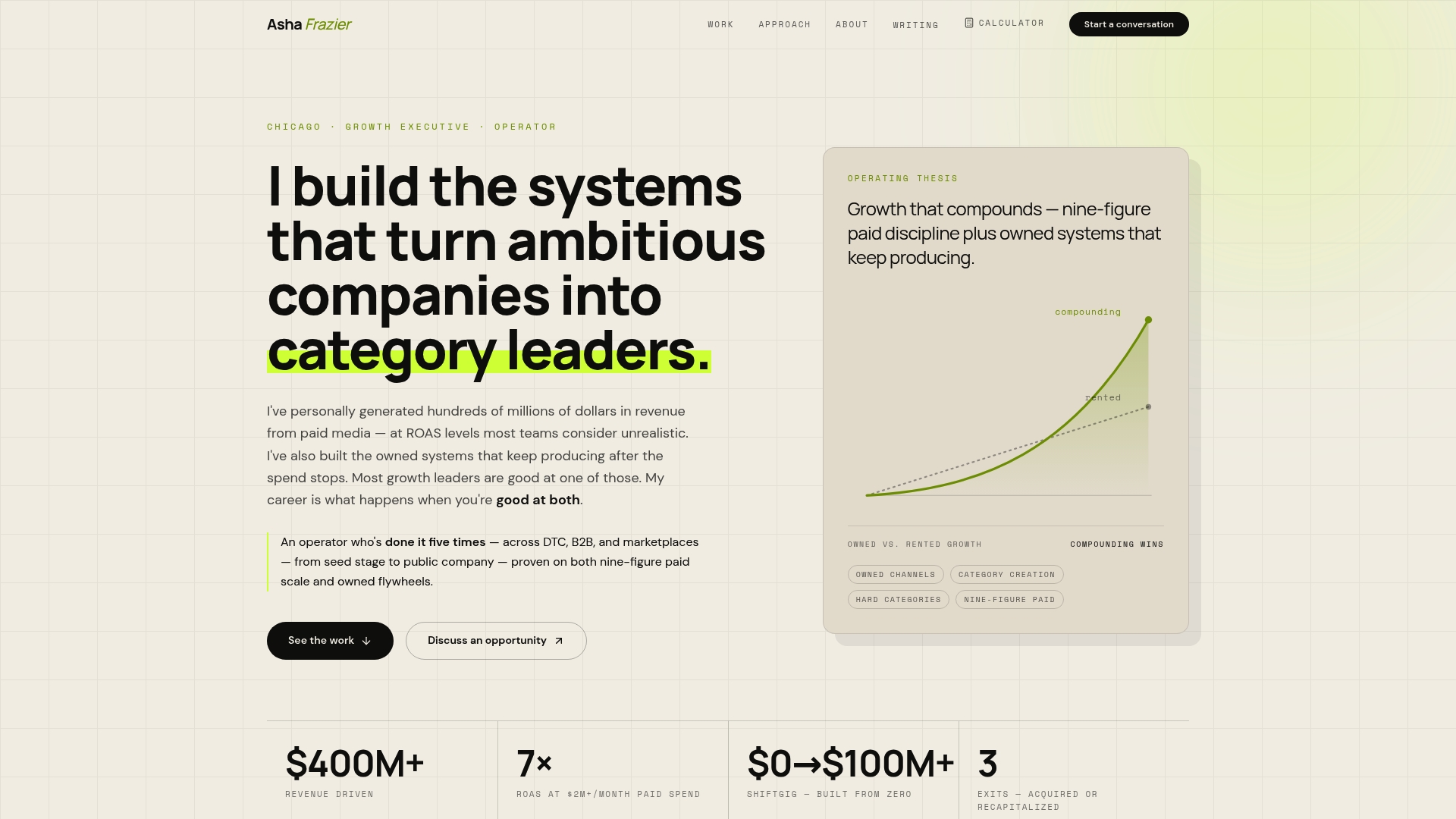
That track record includes turning around a cash-burning DTC brand into a $100 million exit and cutting a B2B marketplace's CAC from $150 to $11 per brand. If you want to see the underlying math on your own numbers first, run them through the Growth Score Calculator to check your LTV, CAC, and payback period. If the math points to a gap, start with an audit request through Asha Frazier's growth consulting page and get a specific read on where your funnel is leaking budget.
Where to Learn More About Paid Media Strategy
- Adobe's paid media overview clarifies the paid, owned, earned distinction from first principles.
- CXL's channel breakdown maps each channel to its actual funnel role.
- The HQ Digital's practitioner guide explains why MER beats platform ROAS for judging real profitability.
- Working Weekends' strategy guide covers experimentation budgets and creative testing cadence in practical detail.
Sources
- Paid media — what it is, best practices, and examples. (Adobe for Business)
- How to Build a Paid Media Strategy for Maximum ROI (SearchEngineStrategies)
- Performance marketing: The Complete Practitioner's Guide (The HQ Digital)
- Performance Marketing strategy guide (Working Weekends)
- Paid media: Definition, Channels, and Tactics (CXL)